
St. Clair Shores Resident Lookup Basics
There is no official all-residents database for St. Clair Shores. Instead, a resident lookup moves between sources that answer narrow questions: whether a parcel exists, whether a case was filed, whether an event certificate is available, or whether an older local listing supplies a dated lead. Keeping those questions separate prevents a parcel owner, voter, court party, business agent, and directory entry from being collapsed into one person.
| Record | What It Confirms | Where | Access |
|---|---|---|---|
| Assessor and parcel record | Parcel, displayed owner or taxpayer field, situs and mailing distinction | St. Clair Shores Assessor and BS&A | Online details; City Hall inspection or FOIA route for more |
| GIS and deed record | Tax ID, legal description, recorded parties, instrument date | Macomb GIS guide and Macomb Register of Deeds | Map, online registry, public terminal, mail, or staff search |
| Voter registration | Individual registration and polling information | Michigan Voter Information Center | Individual lookup with protected fields withheld |
| Court and probate index | Case number, court, party role, case type, and docket routing | MiCOURT, CourtView, and Macomb Probate Court | Informational index plus clerk copy and certification routes |
| Vital and historical records | Event facts or a dated family and address lead | Macomb genealogy, MDHHS Vital Records, and Mount Clemens Library indexes | Record-specific eligibility, copy, library, and archive access |
For a parcel-linked question, begin with the St. Clair Shores assessor or GIS record and preserve the physical-location and mailing labels. For a name-only question, begin with a court or voter index only when you have lawful matching details. A vital record, historical index, or probate file is better used to confirm a dated relationship or event than to claim a present location.
St. Clair Shores Lookup Fields
The portals do not work as interchangeable name lists. The Michigan Voter Information Center is an individual voter-registration tool, while court systems route a search to a case record. Use the exact field set offered by each source, then compare the resulting court, date, case number, or registration context before drawing a conclusion about a St. Clair Shores name.
| Source | Search fields or controls | Useful result inventory |
|---|---|---|
| Michigan Voter Information Center | First name, last name, birth month, birth year, and ZIP code; alternate driver-license or state-ID route | Registration status, polling place and hours, sample ballot, subscription options, and absentee tracking where applicable |
| MiCOURT Case Search | Participant name or case number, with case-type filters described in the official API reference | Public case categories subject to exclusions; informational only, not a certified record |
| 40th District Court request form | Party first, middle, and last name; date of birth; case number; case type or charge; incident year; record choice | Certified disposition or conviction, misdemeanor disposition, civil or traffic, general civil, and individual or all-file choices |
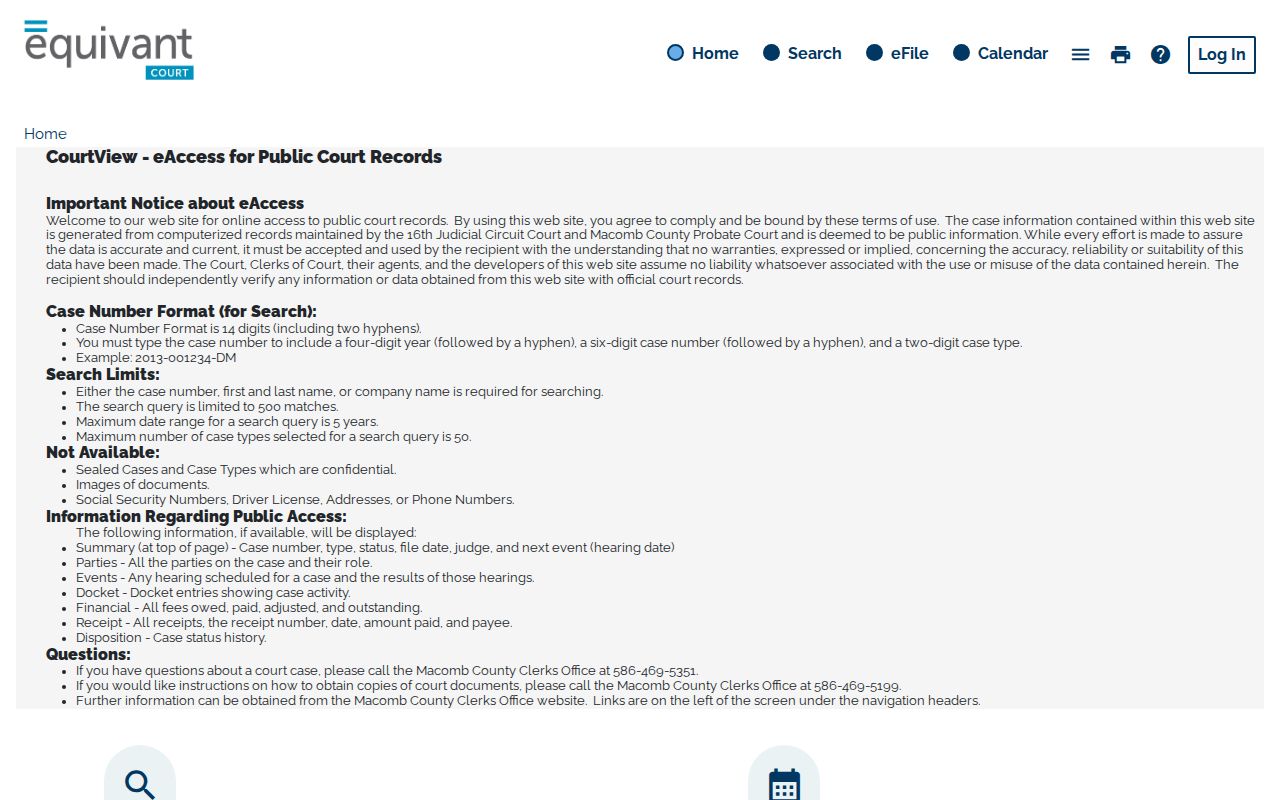
| Macomb CourtView | Participant or case search followed by the court and case number | Docket and document-request routing; clerk confirmation remains the controlling step |
A court docket result can show a case number, court, case type, dates, party roles, docket entries, and a disposition or judgment where available. It is not a finding about a person simply because the name is similar. Sealed, juvenile, adoption, mental-health, PPO, will, and other protected matters can be unavailable; MiCOURT also notes that some criminal-conviction display is limited to seven years.
For a direct view of the local court-search route, see the Macomb CourtView source shown below. The source is a starting point for a case number and court, not a substitute for the clerk’s file or a certified copy.
When a specific local file is needed, the 40th District Court clerk is at 27701 Jefferson Avenue and can be reached at 586-445-5280. The court states that up to three specific files are generally available within two business days unless storage retrieval is needed, while a request for more files takes a reasonable time.
Verify St. Clair Shores Resident Records
A good St. Clair Shores verification starts by anchoring a name to one source and then seeking a second record that answers a different question. It does not make a match stronger by repeating the same name in several databases. Record the source agency, exact spelling, date, role, and identifier at each step so an uncertain match can be revisited or corrected.
- Start with a known city address, approximate date, or parcel and record the exact name form, including any middle initial or Saint Clair spelling.
- Use GIS or the assessor record to separate the physical situs from a tax mailing field, then retain the parcel number and legal description as anchors.
- Search the appropriate court or voter source only with the lawful details it requires. Save the case number, court, party role, or result date rather than relying on a name hit.
- Compare a second independent anchor, such as the same parcel, a recorded instrument, a lawfully displayed birth year, or a dated historical relationship.
- Ask the custodian a narrow question when a copy or clarification is needed. The assessor, court clerk, Register of Deeds, local clerk, and state agency each control different records.
- Docket
- A court’s running list of case events, filings, hearings, and actions. It routes a researcher to the file but is not the same as the complete file.
- Index versus image
- An index helps identify a record by name, number, date, or subject; an image is the document view and may have a separate access path.
- Certified copy
- A copy issued or certified by the custodian for the purpose that office permits. It is distinct from an informational screen result.
Same-name traps matter in St. Clair Shores and across Macomb County. An owner, grantor, taxpayer, voter, business agent, historical directory entrant, and court party may be different people. Label a source as “owns,” “was listed in,” “received mail at,” or “appeared in a case” rather than converting it into a broad claim of identity or current residence.
St. Clair Shores Vital Record Routes
Vital and probate records can confirm limited event or estate facts when a St. Clair Shores question has reached that stage. The City Clerk can issue certified death records for deaths in the city after 1922, while Macomb genealogy offers older index and inspection routes under its stated rules. MDHHS is the statewide order path, but current vital records are not a public name index.
Macomb genealogy inspection is available Tuesday through Thursday from 9:00 to 11:30 for qualifying county events that are generally at least 100 years old. Birth records begin in 1867, death indexes cover 1867 to 1933, and marriage indexes extend through 1962, with the access distinction described by the county. A shared surname is a lead, not proof of a relationship. Confirm the event with its custodian or a compatible source such as probate, a deed, an obituary, or a dated directory entry.
The MiCOURT case-search source is useful for checking public court categories before a file request. It is informational, excludes sensitive categories, and should be followed by the relevant court’s copy procedure when the record itself matters.
Macomb Probate Court can confirm that an estate, trust, guardianship, or conservatorship case exists and can supply case routing where public. Its request process uses the case number and “In the matter of” wording. Do not treat an estate index as a general family register, and do not expect unredacted personal information or protected filings to be publicly available.
St. Clair Shores Classmate Lookup
For a former classmate or a historical family question, begin with dated sources rather than a claim about a current address. The Mount Clemens Library indexes include city directories, obituaries, funeral-home records, probate, court, military, yearbook, and local-name material. St. Clair Shores Public Library’s digital and online-resource links also point to local photos, oral histories, Michiganology, cemetery records, newspapers, genealogy services, and Archives resources.
This St. Clair Shores resident lookup path is deliberately historical: compare a yearbook or directory entry with an obituary index, a certificate order route, a probate case, or a recorded conveyance. It preserves the date and source context and avoids treating an old listing as proof that a person is still at the same address. A birth-parent inquiry should use Michigan’s official adoption-information or confidential-intermediary channels, not a public directory.
St. Clair Shores License Records
A public filing can answer a limited organization or credential question without establishing a St. Clair Shores residence. The LARA MiPLUS assistant routes users to professional license verification, while the MiBusiness Registry offers Business Entity, Mark and Insignia, Historic Card File, and Certificate Verification paths. Save the record type, status, date, and official source when one of these records is relevant.
A MiBusiness result can display an entity name, type, status, filing history, registered office, and registered agent. Those are filing fields, not proof that a named individual lives at the address. A MiPLUS result may establish that a license record exists and show the details exposed for that profession, but it should be tied to its license type, number, status, and verification date rather than used as a general identity claim.
St. Clair Shores Lookup Corrections
When an online source stops at an index, choose the office that owns the record rather than sending a broad request. The City of St. Clair Shores FOIA route is appropriate for city administrative records, while police records have a separate route at 27665 Jefferson Avenue, 586-445-5315, and policerecords@scsmi.net. Court files belong with the court, recorded instruments with the Register of Deeds, and voter or vital questions with their own custodians.
A targeted city request names the record type, date range, department, address or parcel, and preferred inspection or copy format. Michigan FOIA generally calls for a response in five business days with a possible ten-business-day extension; the city gives separate guidance for electronic requests. The city may charge authorized search, retrieval, review, separation, copying, and mailing costs, and may require a deposit when estimated fees exceed $50.
If a St. Clair Shores record is wrong, ask the source agency to correct or explain it. Court issues go to the court clerk; property facts go to the assessor or Register of Deeds; voter information goes to the local clerk or Michigan Department of State; and a vital certificate issue goes to its issuing office. Do not overwrite a source claim in a personal note and call the result verified.
St. Clair Shores Lookup Privacy
A resident lookup in St. Clair Shores has firm limits. Voter registration is public subject to exclusions that include full driver-license or state-ID numbers, month and day of birth, phone, email, signature, Social Security number, and registration-administration details. The Michigan Vital Records Act, MCL 333.2882, restricts births under 100 years, and other vital certificates follow their own eligibility rules. Motor-vehicle information, protected voter information, juvenile and sealed court matters, adoption material, mental-health records, victim information, and nonpublic probate material do not become directory content.
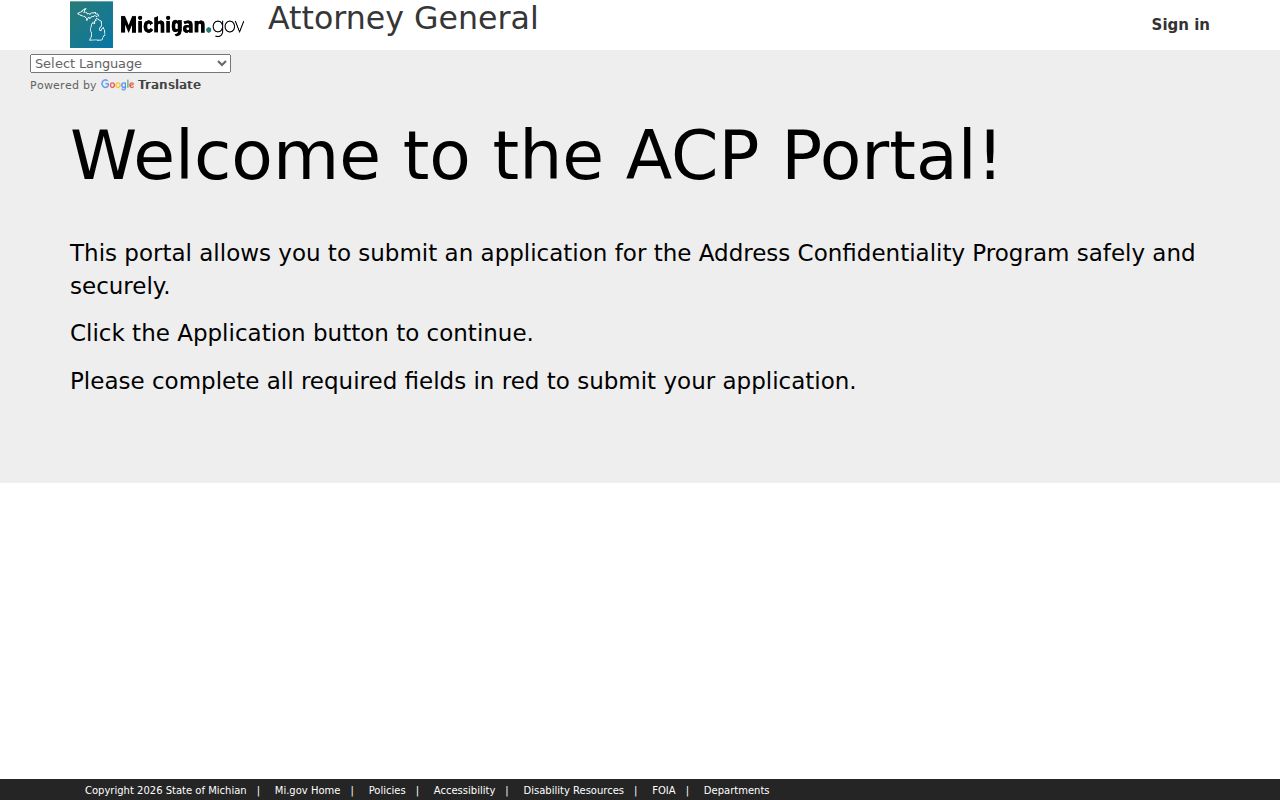
Safe at Home participants use a designated address and mail-forwarding service because their actual location is protected. The Michigan Safe at Home source illustrates the protected-address program that a lawful St. Clair Shores lookup must respect.
A protected address is not a research gap to work around. Do not publish it, combine partial records to infer it, or use an old record as an invitation to contact someone. The same restraint applies when a name appears in more than one system without a reliable second anchor.
Lawful use. Use St. Clair Shores public records for a focused, lawful question and confirm important facts with the custodian. Michigan’s stalking statute makes clear that records access does not authorize repeated unwanted contact, harassment, intimidation, or harm.